Jisu Kim:
For a Bridge
29 December 2025 - 17 January 2026
Hall1, Seoul
Curated by Jiwon Yu
Graphic design by Minjong Kim
Installation by Hong & Jang
AV Tech by Manriart Makers
With thanks to Calcium, Prop Seoul, Jiho Park
Supported by Arts Council Korea
걸음의 목격-동반-협력자가 되기
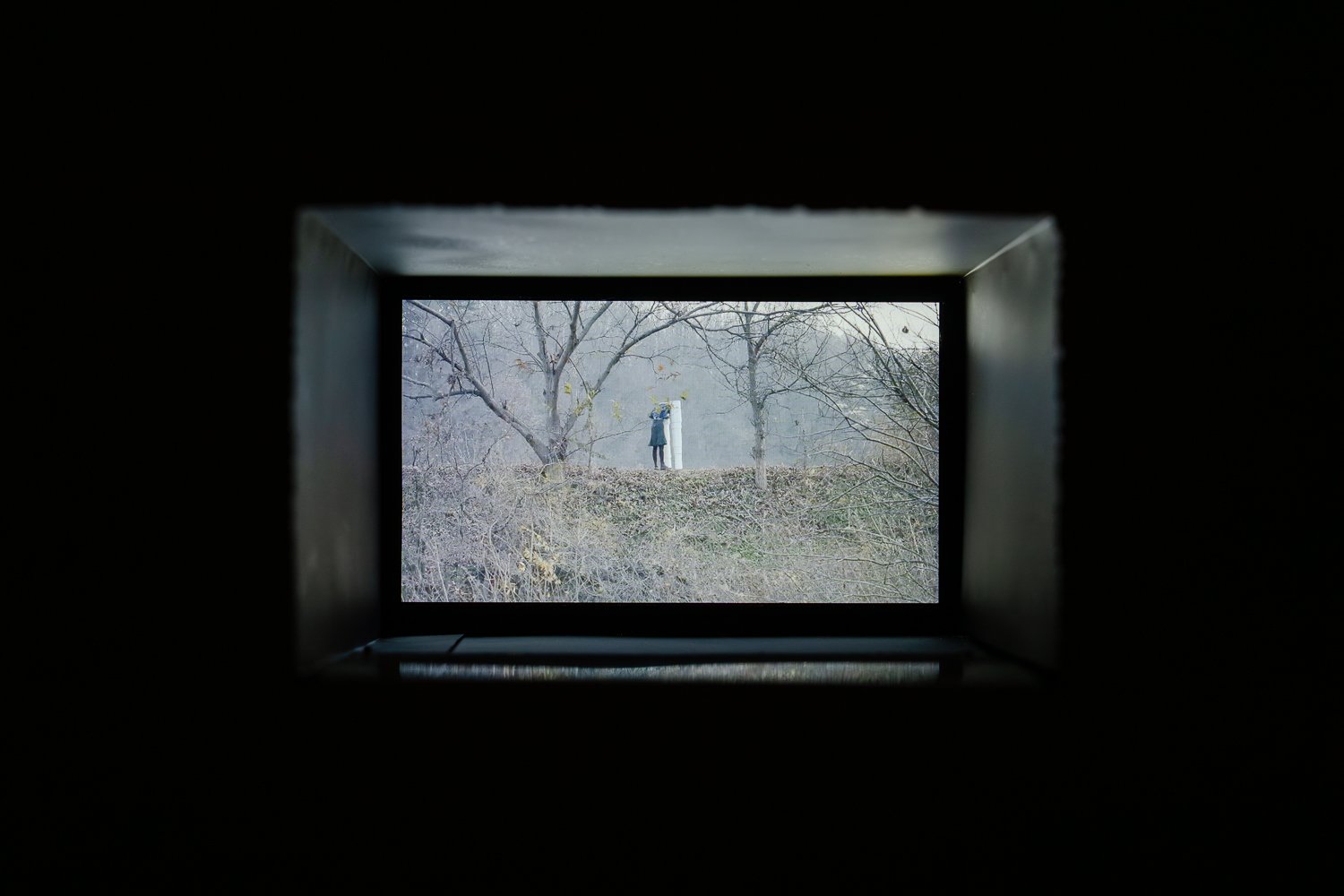
김지수는 걸었다. 며칠을, 몇 개월을, 몇 년을. 어린 시절을 보낸, 아침마다 안개가 자욱하게 깔리던, 1981년 금강 상류 댐 건설로 인해 수몰된, 무명의 생태가 지난 삶의 흔적을 끈적하게 매우는, 고립되었지만 길들여지지 않는, 물줄기와 땅의 경계가 무의미한, 지도상 비어 있어 경로는 될 수 있어도 행선지가 될 리는 없는, 어김없이 찾아오는 계절의 변화와 나날의 기상 상황에 따라 너그럽거나 각박한, 그곳을. 김지수는 계절과 계절을 걸쳐 그곳을 찾아, "걸어 들어갈 수 있는 거리, 동선, 발의 촉감과 자세, 발소리 등 몸 주변의 총체적인 변화"에 스스로를 노출했다. 서로 교차되는 다리(들) 외 다른 이동 수단을 허하지 않는 이곳에서는 걷는 수밖에 없다.
걷는 몸에는 복수의 시스템이 교차한다. 뼈와 관절과 근육과 신경계가 협응하는 전신 운동의 메커니즘, 자연의 시간과 물의 흐름을 중앙집권적으로 수치화 하여 통제하는 인프라, 세대를 거듭하여 땅을 일구고는 이동하여 다시 땅을 일구는 사람들의 적응력, 눈으로 채 파악하기 어려운 미세한 생태계의 법칙. 그 한 가운데 김지수는 임의의 규칙들을 설정하여 집행하고, 그 경험과 장치의 시선이 보내 온 피드백을 바탕으로 몸과 장치를 재정비하여 다시 걷기를 반복했다. 어쩌면 우리는 여태 걷는 방법을 몰랐던 걸까? 여러 힘들이 경합하는 이곳에서 걷기는 매번 다시 배우고 갱신해야 하는 행위다. 김지수는 불안정성을 급진적으로 수용하여, 걷는 행위를 물질적, 제도적, 생태적 힘이 동시에 몸을 관통하도록 하는 일종의 굴착 기술로 재발명한다.
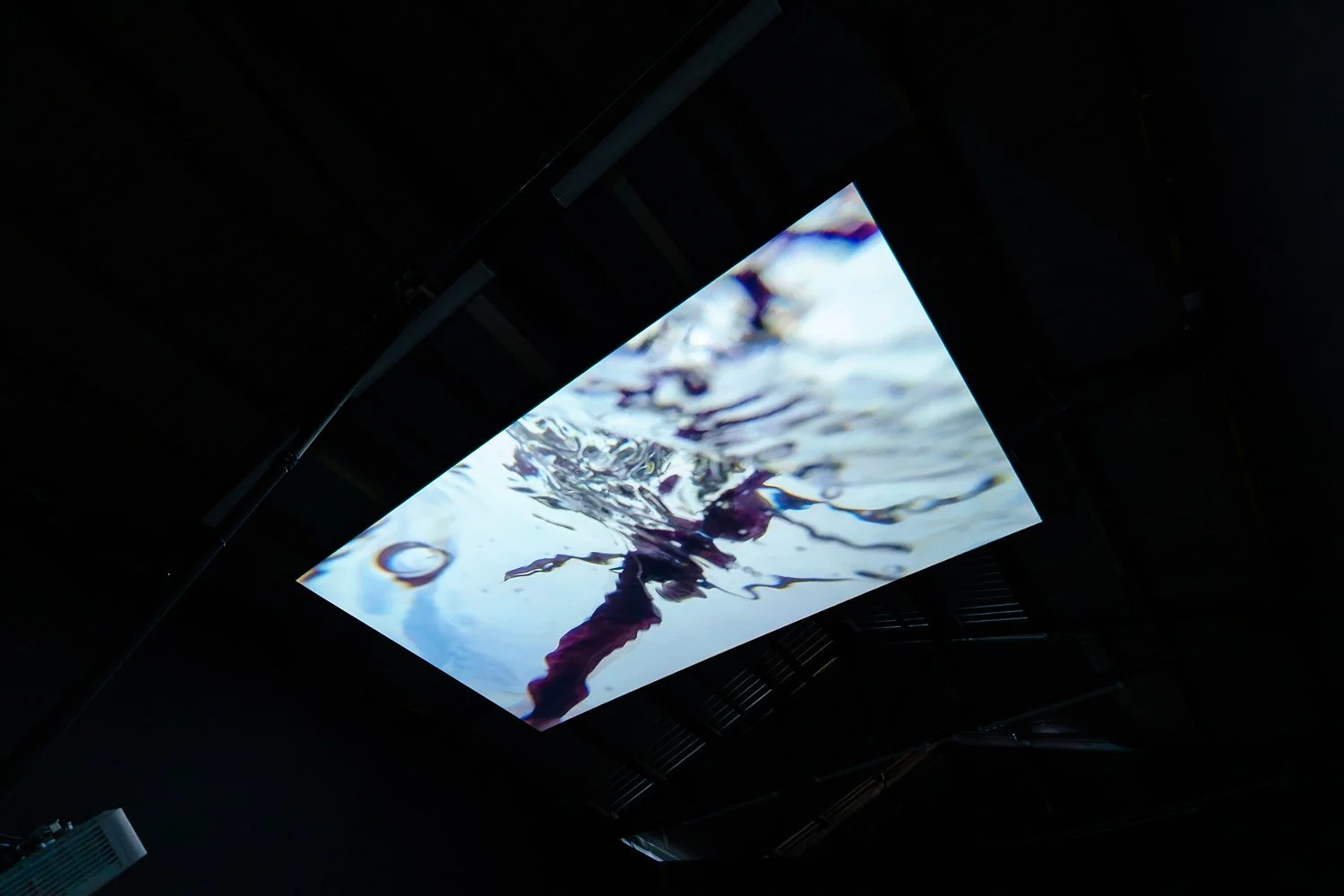
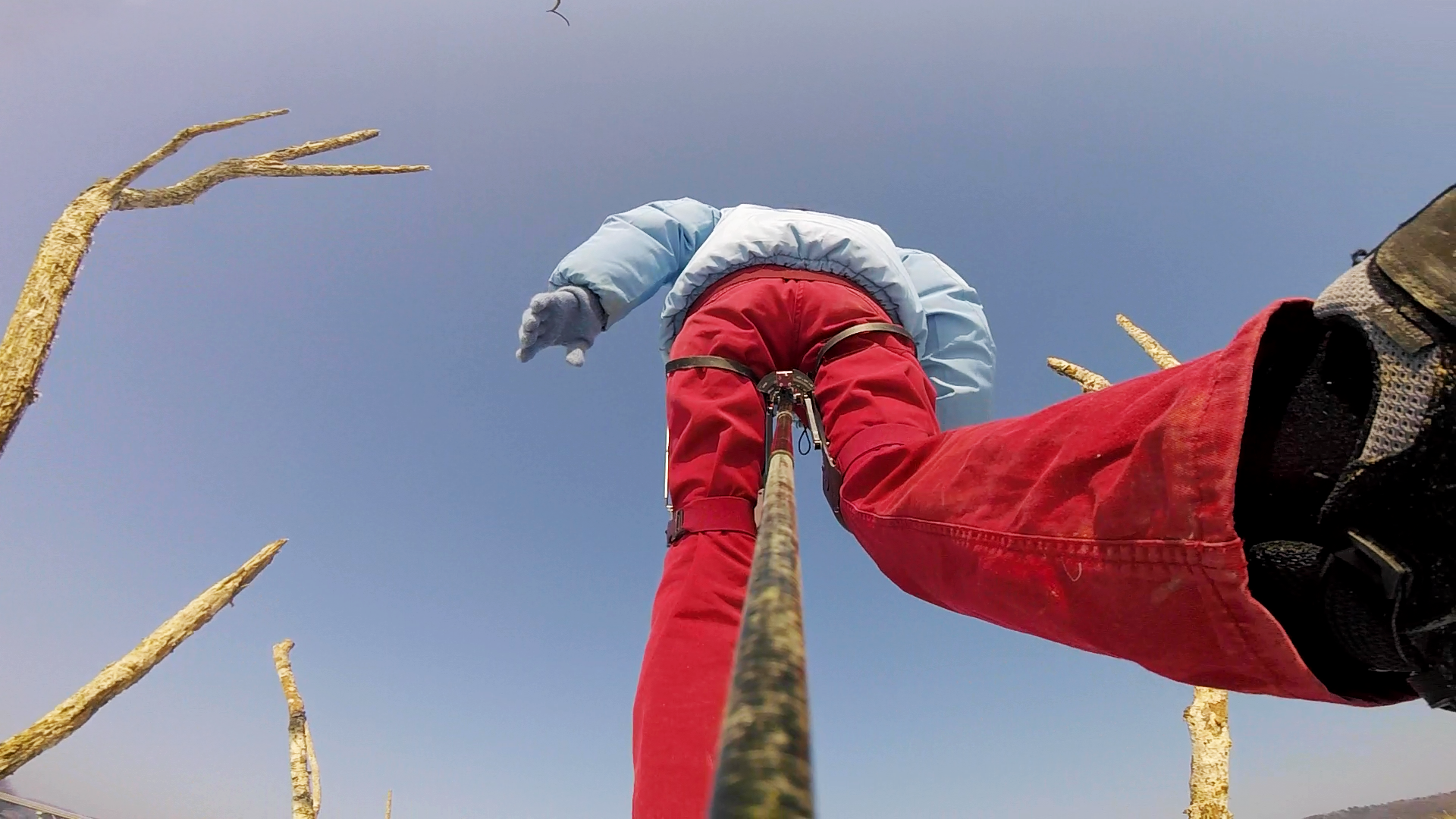
우리가 그 걸음을 목격할 수 있는 것은 김지수가 직접 구상, 제작, 착용한 장치 덕분이다. 장치는 김지수의 관절에 긴밀하게 부착되어 있어 우리는 수동적으로 그 몸에 탑승하여, 그 몸의 일부로서 그의 여정에 목격한다. 걷는 것은 우리가 아니기에 속세를 벗어난 고독한 산책자나 도심을 거니는 플라뇌르의 주체성은 우리에게 허락되지 않는다. 걷고 있는 가랑이를 올려다 보는 우리는 걷는 인간의 눈, 그를 바라보는 외부의 관점, 침입 당하는 다종다양한 생물과 환경의 자리 그 사이에 머물 뿐이다. 어느새, 우리는 포장 도로의 가드레일을 넘어, 축축한 땅에 누워있다. 이야기도 설명도 없이 침입하는 운동과 증폭되는 감각에 몸을 맡긴다. 그렇게 걷기 기술에 참여하는 또 다른 몸이 된다.
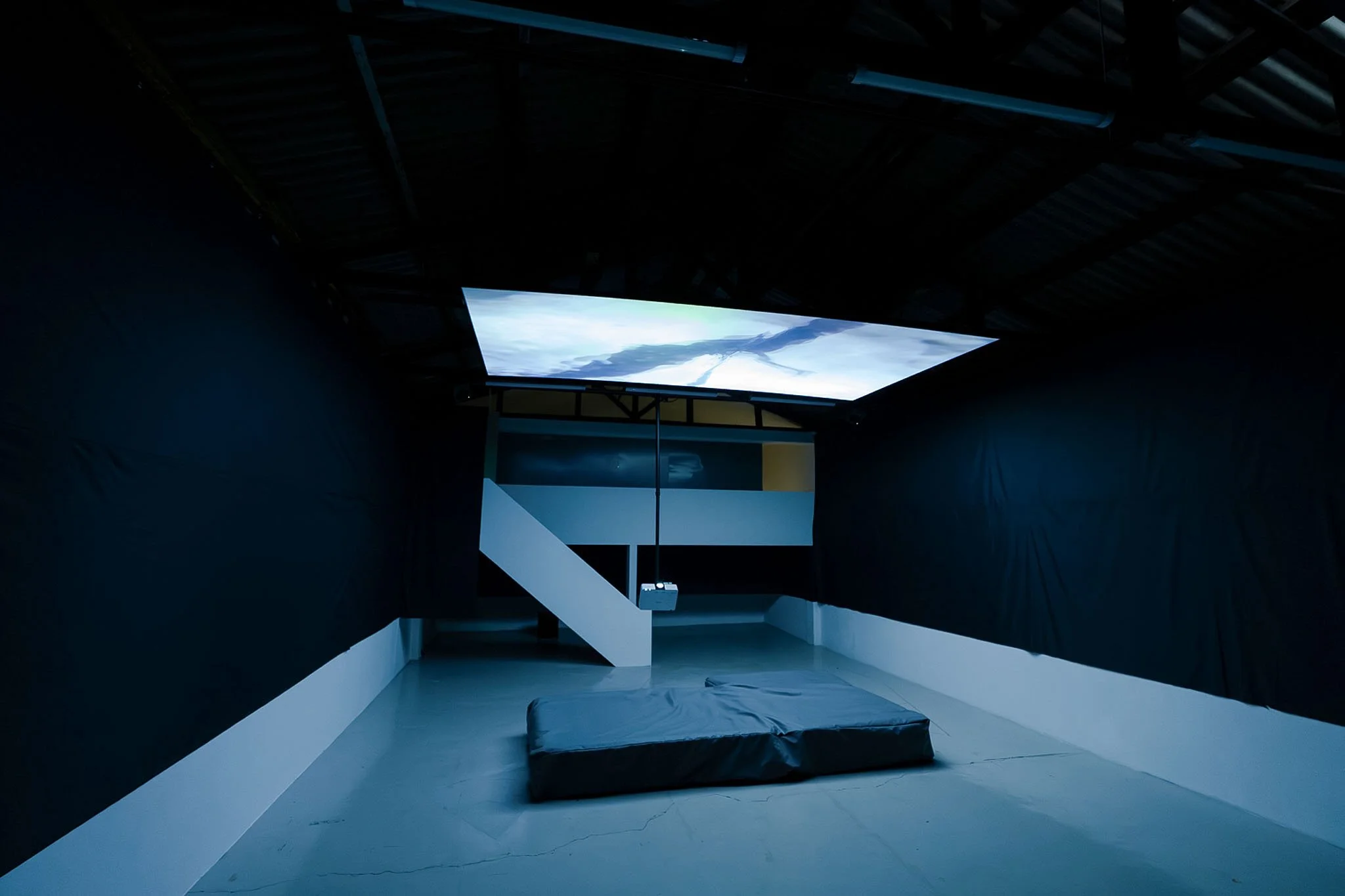
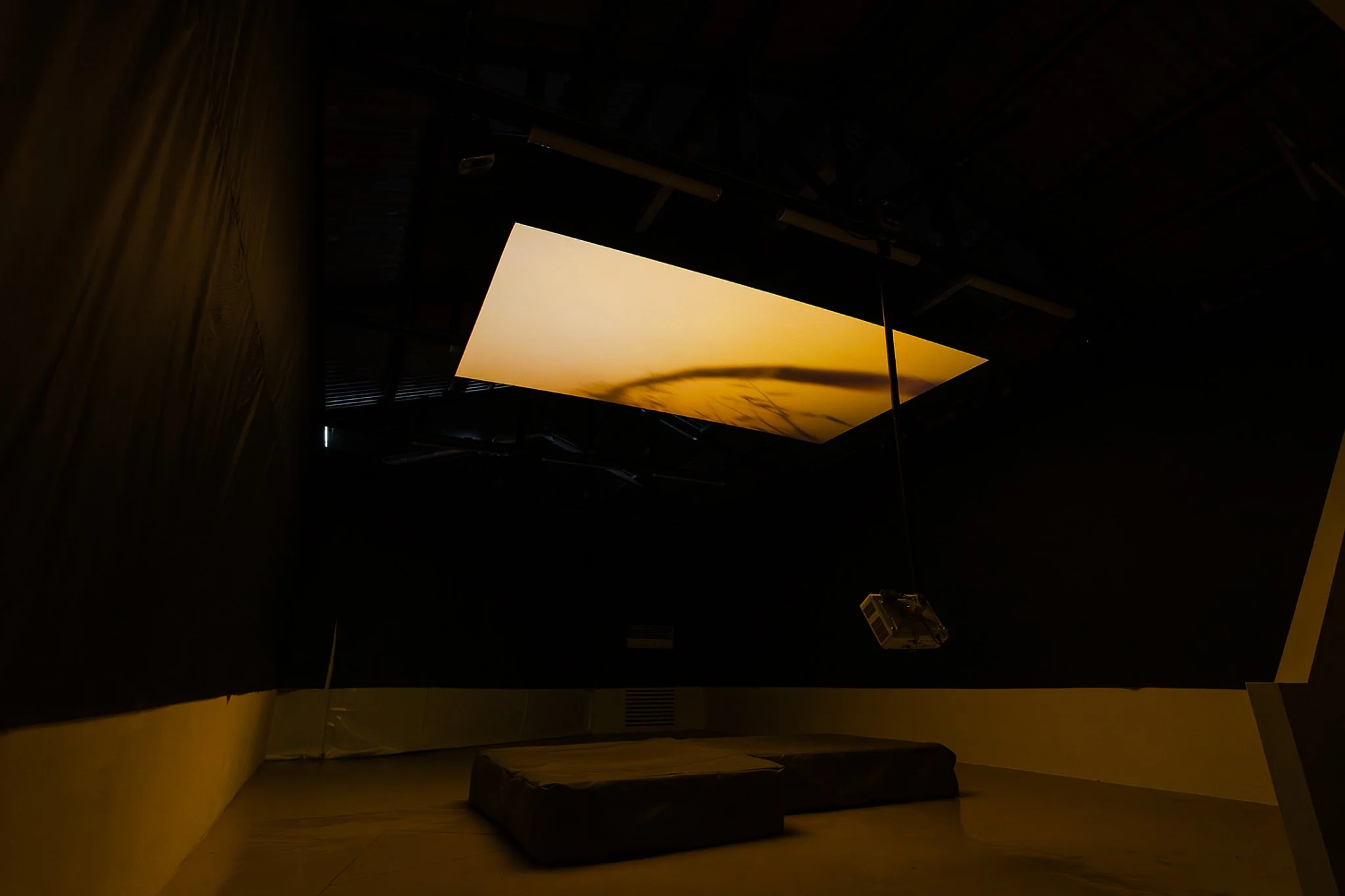
3년을 걸었다고 한다. 그에 비해 일견 잘 통제된 도시의 한 창고에 자리 잡은 이 전시의 시간은 한 달도 채 되지 않으며, 전시를 감상하는 시간은 변화를 빚어내기에는 턱없이 부족한 시간일테다. 김지수의 걷기 기술을 목격하는 일은, 절대적으로 유연한 땅에 취약한 채로 머무는 것은, 필히 시간의 농축을 요한다. 계단을 올라, 발과 귀를 잇는 기구를 착용하고 안개가 자욱한 가운데 무언가 솟아나 땅을 딛거나 땅으로 추락하는 소리를 들으려는 몸을 엿본다. 도입부와 결말이 없는 그 소리는 두텁게 접힌 시간을, 강요된 말미에 맞추어 고정된 걸음을 이완시켜 미지의 힘에 맡겨둘 때 비로소 들릴 것이다.
Becoming a Witness–Companion–Collaborator of Walking
Jisu Kim walked. For days, for months, for years. She walked through a particular place—where she had spent her childhood; where fog used to settle every morning; which was submerged due to the construction of an upstream dam on the Geum River in 1981; where unidentified ecologies cling viscously to traces of past human lives; isolated yet untamed; where the boundary between watercourse and land loses meaning; where the area appears empty on the map—capable of becoming a route but never a destination; a place that grows generous or harsh depending on the recurring seasons and daily weather conditions.
Kim returned to this place across seasons, exposing herself to what she describes as “a walkable distance, pathways, the tactile sensations and posture of the feet, footstep sounds—in short, the totality of changes that occur around the body.” In a land that permits no means of movement other than the crossing of legs, walking is the only option of access.
Multiple systems intersect within the walking body: the mechanics of a full-body movement in which bones, joints, muscles, and the nervous system cooperate; infrastructures that centralize, quantify, and control natural time and the flow of water; the adaptability of people who cultivate the land across generations, then pushed on to cultivate yet another land; and the laws of subtle ecosystems that are difficult to grasp with the naked eye. At the center of this convergence, Kim establishes arbitrary rules and performs choreographed steps, then comes back to her studio to make minor changes before setting out again—reconfiguring her body and devices based on feedback from experience and apparatus alike. Perhaps we never truly knew—or know—how to walk. In a place where multiple forces compete, walking is an act that must be relearned and renewed each time. By radically embracing precarity embedded in the bipedal motion, Kim reinvents walking as a medium or a tunnel—one that allows material, institutional, and ecological forces to penetrate the body simultaneously.
We are able to witness these steps thanks to the devices Kim has designed, fabricated, and worn. Closely attached to her joints, the devices place us in a position of passive boarding: we mount her body and witness the journey as if we were part of it. Yet we are not walking, really. The subjectivity of the solitary wanderer withdrawn from the world, or the flâneur strolling through the city, does not have a say in what is at stake here. Looking up at the moving legs from below, we remain suspended between the eyes of the walking human, the external viewpoint that observes her, and the position of the many species and environments being intruded upon. Before we know it, we have crossed over the guardrail of paved roads and are lying on damp ground. We entrust our bodies to movements that invade without narrative or explanation, to sensations that intensify and amplify. In doing so, we become yet another body participating in this art of walking.
Kim has walked on and off, depending on the season, for three years. In contrast, the duration of this exhibition—situated in a seemingly well-controlled warehouse within the city—lasts less than a month, and the time spent viewing the exhibition is perhaps too brief to generate transformation of seasonal or environmental scale. To witness Kim’s walking as medium, to remain vulnerable on absolutely pliable ground, necessarily requires a condensation of time. We climb the stairs, put on devices that connect foot and ear, and peer into a body that, amid thick fog, listens intently for sounds of something rising to tread the earth or falling back into it. Those sounds—without introduction or conclusion—will only be heard when densely folded time loosens its fixed steps, when we release ourselves from enforced endings and entrust our bodies to unknown forces.